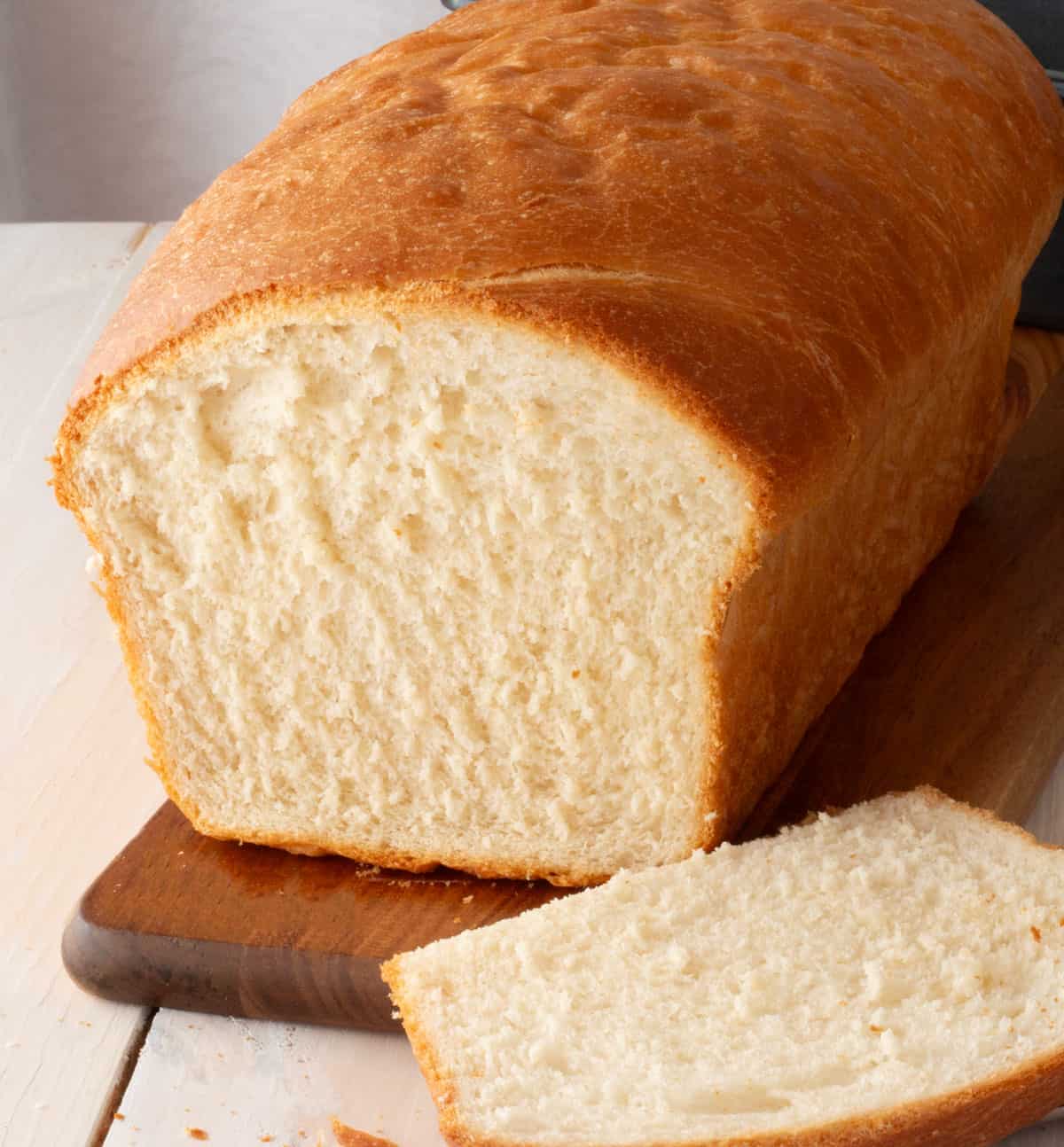
Easy White Sandwich Bread Recipe
Easy soft white sandwich bread with an all-purpose dough and tender crust, perfect for toast, sandwiches, and rolls.
Servings: 2 loaves
Equipment
- (2) 9 x 5 inch loaf pans
Ingredients
- 1 cup milk gently warmed (no hotter than 100°F); prepared powdered milk may be used instead
- 4 teaspoon instant or active dry yeast about 2 (.25 oz) packets
- 2 ½ cups water milk may be used instead for a richer loaf
- 2 tablespoon Maldon sea salt flakes
- 3 tablespoon sugar
- ¼ cup butter or vegetable oil room temperature
- 9 cups bread flour all-purpose flour also works. You may need a little additional flour depending on your kitchen conditions; see Notes below
- 2 tablespoon butter melted, for brushing on before baking
Instructions
- Mix & Knead the Dough
- Combine the warm milk and yeast in a large mixing bowl or the bowl of a stand mixer fitted with the dough hook. Let sit for about 5 minutes, until you see small bubbles and a little froth, which means the yeast is active.
- Add the water (or milk, if preferred), salt, and sugar. If using a stand mixer, mix on low speed to combine. If mixing by hand, stir to combine.
- Add about 8 cups of flour if using a stand mixer, or about 8½ cups if mixing by hand. If using a stand mixer, keep the mixer on low and scrape down the sides and bottom of the bowl as needed. If mixing by hand, stir with a sturdy spoon or use clean hands until most of the flour is incorporated. The dough will be quite wet at this point, like a thick cake batter.
- Let the dough rest for 5 minutes so the flour can hydrate and fully absorb the liquid.
- Add the softened butter or vegetable oil a little at a time. If using a stand mixer, mix on low until fully incorporated. If mixing by hand, work it into the dough with your hands until fully incorporated. The dough may feel slippery at first, but it will come together.
- Add the remaining flour a little at a time, up to about 1 cup if using a stand mixer, or about ½ cup if mixing by hand, until the dough begins to pull together. Add additional flour only if needed.If using a stand mixer, look for the dough to pull away from the sides of the bowl in thick strands. If mixing by hand, it should begin to come together and feel less sticky. Avoid adding too much flour; the dough will continue to firm up as it kneads, and too much flour can make the finished bread less tender.
- If using a stand mixer, continue knead on low to medium-low for 5–7 minutes, until the dough is smooth, shiny, elastic, and forms a ball around the dough hook. If mixing by hand, continue to work the dough in the bowl for 2–3 minutes, then turn it onto a well-floured surface and knead for about 5 more minutes, adding a little flour as needed, until smooth, shiny, and elastic.
- Using a light touch and lightly floured fingers, shape the dough into a ball. It should feel cushiony, spongy, and silky, almost like a heavy pillow.
First Rise
- Place the dough in a lightly greased bowl or bread tub. Cover and let rise in a warm spot, ideally around 75–80°F, until doubled in size. This may take about 30 minutes in a warm kitchen or up to an hour if your room is cooler.
- While the dough rises, grease two 9×5-inch loaf pans with softened butter, oil, or cooking spray. Butter gives the best color and flavor.
Shape the Loaves
- Once the dough has doubled, turn it out onto a lightly floured surface and divide it into two equal portions.
- Working with one portion at a time, roll the dough into a 9×12-inch rectangle, gently pressing out any large air bubbles.
- Starting from the short, 9-inch end, roll the dough tightly into a log about the length of your loaf pan.
- Tuck the ends under and pinch the seam closed. Place the loaf seam-side down in a greased 9×5-inch loaf pan. Gently pat the top to even out the shape and help it fill the pan.
Second Rise
- Cover the loaves lightly and let proof in a warm spot, around 78°F, until the dough is about 1 inch above the rim of the pan and nicely domed, about 30–45 minutes depending on room temperature.
- Avoid overproofing; the loaves will continue to rise in the oven.
- While the dough proofs, preheat the oven to 375°F.
Bake
- Once proofed, gently brush the tops with melted butter.
- Bake on the middle rack for 30–40 minutes. Check the loaves around the 20-minute mark and rotate the pans for even browning. If the tops begin browning too quickly, tent loosely with foil.
- The loaves are done when golden brown on all sides and the bottoms sound hollow when tapped, or when an instant-read thermometer inserted into the center reads about 190°F.
- Remove from the oven and let cool in the pans for 5 minutes.
- Run a butter knife along the edges to loosen, then carefully turn the loaves out onto a wire rack or countertop. If needed, return them directly to the oven rack, without the pans, for an additional 5 minutes to finish baking.
- Let cool completely for about 45 minutes before slicing. Slicing too early can make the crumb gummy.
Notes
Bread baking always involves a little intuition. Temperature, humidity, and even your flour can change how the dough behaves. Think of this recipe as getting you 90% of the way there; the last 10% is trusting your senses.
If the dough feels too sticky, sprinkle in a little more flour as you knead. Cooler kitchens, around 70°F or below, will need longer proofing, while warmer kitchens, around 78–80°F and above, rise much faster.
Every oven runs a little differently, so keep an eye on the color as the bread bakes. The loaf should be a deep golden brown and sound hollow when tapped on the bottom—that’s one of the best signs it’s baked through.
Once cooled, store at room temperature for up to 4 days, or slice and freeze for easy grab-and-go pieces later on.
Ingredient swaps: Milk and water can be used interchangeably. Salted butter is preferred, though vegetable oil also works just fine. All-purpose flour can replace bread flour, though bread flour gives the loaf a slightly chewier texture and helps it rise a little higher. Powdered milk is a great option if you don’t have fresh milk.